Ramaniyam
A creator-led venture developed through LaunchBox. Seven creator partnerships produced more than 25 promotional posts, alongside reported gains in engagement and weekly sales.
PLAYER 01 · RUTHVIK UTTARALA
Software Engineer
I build dependable backend systems, full-stack products, cloud infrastructure, and applied AI workflows.
Python · TypeScript · React · Next.js · Flask · FastAPI · AWS · PostgreSQL · Kafka

Origin story
I was born in Visakhapatnam, India, and my family moved to Hyderabad when I was one.
I was seven when I watched the Telugu version of Robo with my brother. He was terrified. I remember him crying when the robot started turning against the people around it.
I couldn’t stop watching.
What fascinated me wasn’t the destruction. It was the idea that someone could build something like that. I had no idea what the path into technology would look like. I just knew I wanted to understand it.
RU · 01 / 06
Penn State
Penn State shaped me far beyond academics. The friendships and connections mattered, but so did a realization that changed how I see progress: consistent work can dramatically accelerate how quickly I improve.
I completed my B.S. in Computer Science in December 2025, earned the President Walker Award, AWS certifications in machine learning and AI, and a Product Innovation Entrepreneurship Certificate. PlantVillage introduced me to applied AI research; Happy Valley LaunchBox taught me to test ideas against reality.
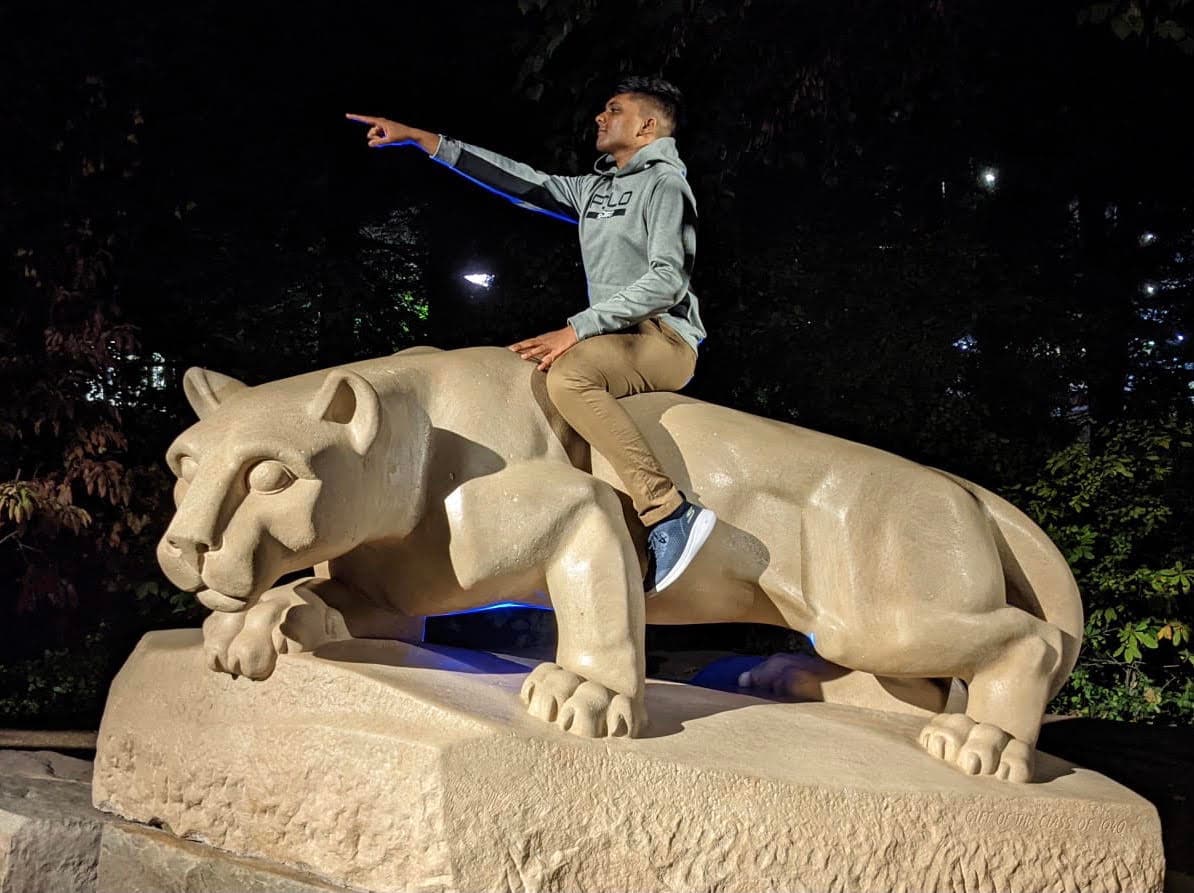
MY THRONE
To everyone else, it’s the Nittany Lion Shrine. To me, it’s a throne.When I sit there, I feel like I’m sitting on top of the world. It holds confidence, community, ambition, and the mindset Penn State gave me.THREE EXPERIMENTS
A creator-led venture developed through LaunchBox. Seven creator partnerships produced more than 25 promotional posts, alongside reported gains in engagement and weekly sales.
A three-person founding team explored student needs through Idea TestLab and translated feedback into product strategy and pitches.
An entrepreneurial experiment from my Penn State learning journey. I am keeping the public description intentionally modest while the idea evolves.
Start with a problem interesting enough to keep asking questions about.
RU · 02 / 06
Selected builds
No invented screenshots—just verified architecture, engineering decisions, and source.
Commerce infrastructure
One calmer path from product idea to published storefront.
Boutique sellers needed one dependable workflow for product setup, AI-assisted copy, and publishing across commerce and social channels.
A Next.js, TypeScript, and Supabase application with 33 API route files, authenticated product workflows, image uploads, merchant-editable AI content, and OAuth integrations for Shopify and Instagram.
The integration is the product. Clear auth state and recoverable failures matter as much as the generation step.
View source ↗Cloud analysis
Infrastructure advice should begin with evidence, not confidence.
Cloud recommendations become dangerous when discovery is incomplete or model output is treated as trusted structure.
A Python and FastAPI discovery service spanning four AWS service families, with STS verification, pagination, partial-failure reporting, and a Bedrock Converse pipeline guarded by Pydantic validation, JSON recovery, retries, and deterministic fallbacks.
Defensive parsing and explicit partial failure turn an AI demo into a system someone can reason about.
View source ↗Assistive AI
Help should feel grounded, patient, and reversible.
Older adults can face friction in telehealth portals when tasks span many unfamiliar steps and unsupported states are not explained.
A React and TypeScript Chrome MV3 assistant that translates typed or spoken goals into one grounded UI action at a time, backed by Node.js, Cloud Run, Vertex AI, and Firestore traces, with telehealth-only guardrails.
Constraining an agent can make it more humane. One explainable step is often better than an ambitious sequence.
View source ↗Release orchestration
A release is easier to trust when its state is visible.
Validation, deployment, verification, and history are difficult to reason about when they are scattered across tools.
A release-orchestration dashboard that brings pipeline stages and deployment outcomes into one inspectable workflow. Public repository details remain intentionally modest where implementation evidence is limited.
Operational interfaces should reveal state, not decorate it.
View source ↗RU · 03 / 06
Production
FIELD NOTE
At OptimalHub, reliability meant designing for the second attempt, not just the happy path.
FIELD NOTE
At PlantVillage, the useful work happened around the model: persistence, evaluation, observability, and regression coverage.
WORKING TOOLKIT
Languages · Python · TypeScript · JavaScript · Java
Systems · React · Next.js · Flask · FastAPI · Node.js · PostgreSQL · Kafka
Cloud + AI · AWS · Google Cloud · Docker · Bedrock · Gemini · LangChain · LangGraph
Credentials · AWS Certified Machine Learning Engineer · AWS Certified AI Practitioner · Penn State B.S. Computer Science
“The work gets interesting when the happy path ends.”
RU · 04 / 06
Life outside the terminal
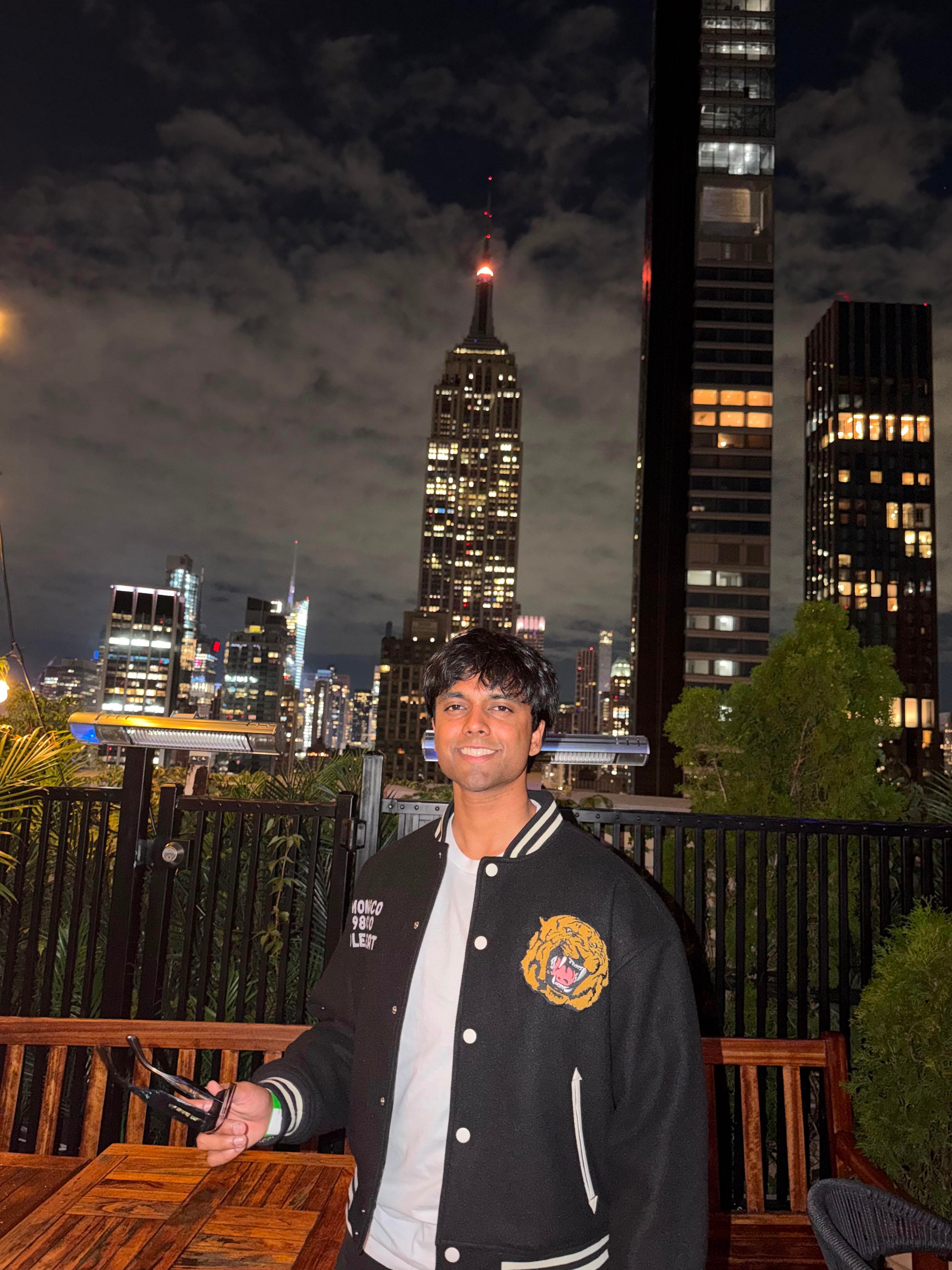
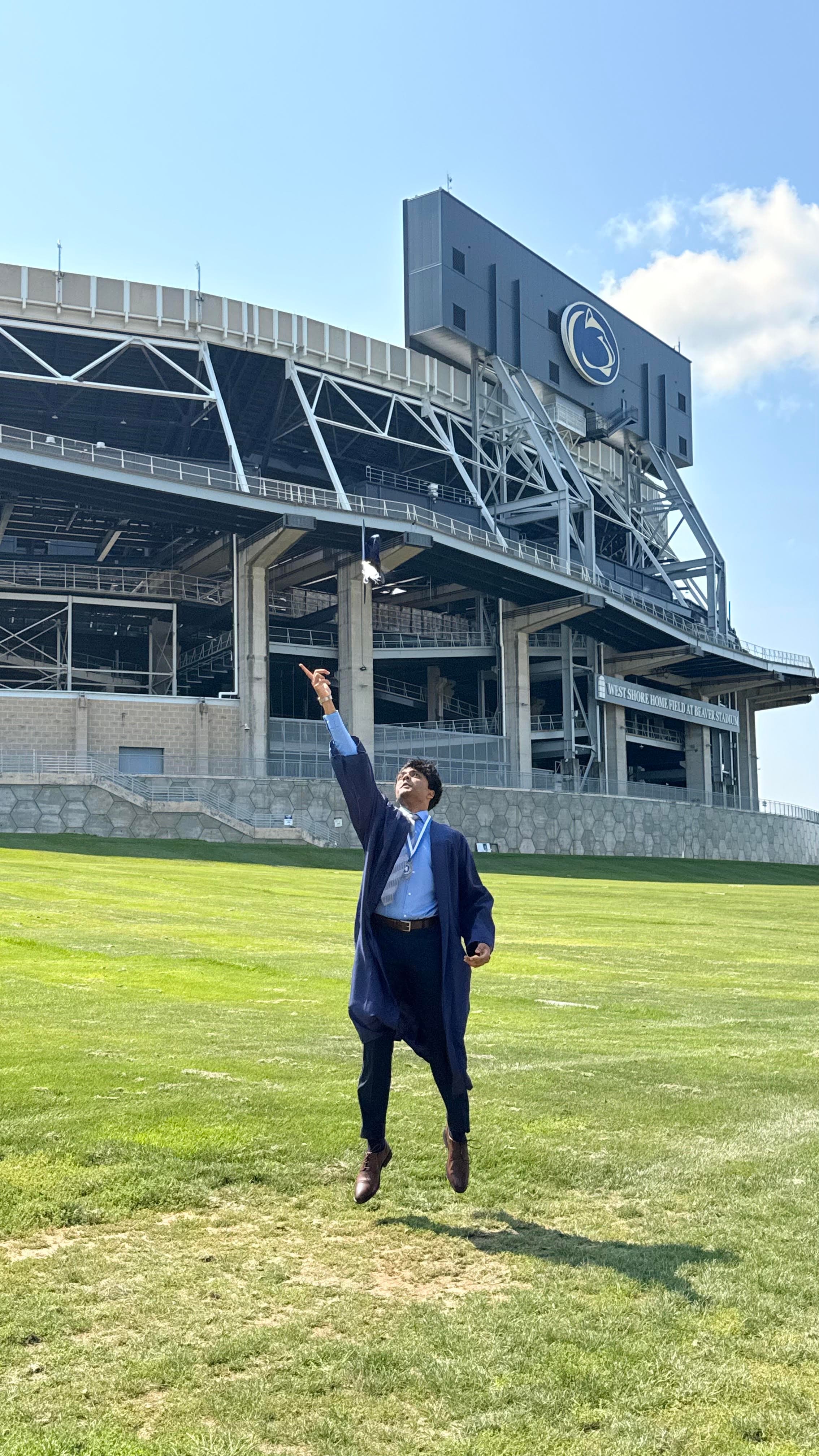
I like the parts of life that resist optimization: a stadium at dusk, a new city, a photograph made because the moment felt worth keeping. A few more live on Instagram ↗
SIDE QUEST JOURNAL
RU · 05 / 06
The long game
I think on a pretty long timeline.
Eventually, I want to build a company in quantum machine learning. My ambitions are huge. I’ve even said I want to become a trillionaire.
But one thing I’ve learned is that having an enormous goal doesn’t mean skipping the steps.
Right now, I want to work alongside engineers who’ve built serious things—in big tech or high-agency engineering companies. I want to learn from them, challenge myself, get things wrong, and get better.
The work comes first.
RU · 06 / 06